Archive | April 2021

Chaplain’s Corner – Soli Deo Gloria (Glory to God Alone)

‘Worship the Lord your God and serve him only.'” (Luke 4:8).

The first three of the Ten Commandments are as follows:

  1. Thou shalt have none other gods before me.
  2. Thou shalt not make thee any graven image, or any likeness of anything that is in heaven above, or that is in the earth beneath, or that is in the waters beneath the earth: Thou shalt not bow down thyself unto them, nor serve them: for I the Lord thy God am a jealous God, visiting the iniquity of the fathers upon the children unto the third and fourth generation of them that hate me, and shewing mercy unto thousands of them that love me and keep my commandments.
  3. Thou shalt not take the name of the Lord thy God in vain: for the Lord will not hold him guiltless that taketh his name in vain.

These three commandments outline our vertical relationship with God and were summed up by Jesus (quoting from Deuteronomy 6:5) as the Greatest Commandment: “Love the Lord your God with all your heart and with all your soul and with all your mind. This is the first and greatest commandment” (Matthew 22:37-38).

We must first understand what a commandment means. A commandment is a MUST DO. It is God who commanded us, so the way we obey these commandments demonstrates our relationship with God. A command also implies that God is observing our obedience, He is measuring our obedience, and He will reward or punish us based on our obedience. That being said, how do we love the Lord our God with all of our heart, soul, and mind?

First, we commit to worshipping God and only Him. Only God is worthy of our worship because only God possesses the attributes of God. I know that is circular argument, but that is the nature of God. We worship God because He is God. Only God is omniscient (all knowing), omnipresent (everywhere all the time), and omnipotent (all-powerful). Only God created the earth, only God is good, and only God can save our souls. Therefore, we commit to worship the Creator and not to worship anything that has been created. Anything created includes nature, art, other people (even our loved ones), our work, our play, our possessions, our talents, our rights, our successes, our habits, or our circumstances including our suffering. Everything we claim as our own is something that has been God-given, and therefore created by God. We must worship God as our Creator and Sustainer and be grateful for all He has given us. When we think about these attributes of God, we realize that there can only be one God, and our God, the Great I Am, is He. He is God; He alone is sovereign.

Failure to obey this commandment is idolatry. If there is a stronghold in your life, consider that this may be your idol. I confess that at one time, my children were my idol. They probably didn’t think so, but I know I put them above everything else in my heart. For you it might be something else. Pray for God to reveal these idols in your life and to help you to put them in their proper place in relationship to God and to you. Everything in your life, even your children, will be the better for it.

Second, we are not to make or worship any images of God. In John 4:24, Jesus explained the rationale behind the second commandment. “God is Spirit, and those who worship Him must worship in spirit and truth.” The use of images and other material things as a focus or help to worship denies who God is – Spirit – and how we must worship Him – in spirit and truth. And Paul reminded us in Romans 1:22-23 of the danger and futility of trying to make God into our own image: “Professing to be wise, they became fools, and changed the glory of the incorruptible God into an image made like corruptible man; and birds and four-footed animals and creeping things.”

Third, we must never misuse or abuse the Name of God, intentionally or frivolously. Profanity obviously falls into this category. We are not to take the Lord’s name in vain, which can also include those thoughtless times that we say OMG (spelled out or abbreviated), or something similar. Another way we misuse the Name of God is to claim the name of God but to act in a way that disgraces Him.  We can tell from this commandment that God pays special attention to how His name is used, and this is because our speech reveals in a unique way and testifies to others the true state of our hearts.  Jesus taught us to begin our prayers by honoring this commandment: “Hallowed be your Name” (Matthew 6:9).

Our obedience to these commandments demonstrates our desire to honor and worship God. As I wrote last week, our obedience will not save us, for if that were the purpose, we would all be doomed to hell. Jesus has already paid the price for our disobedience, and only by trusting Him we are saved. However, our attempts at obedience, as imperfect as they are, demonstrate our heart change and our heart desire to worship God and Him only.

“Some trust in chariots and some in horses, but we trust in the name of the Lord our God (Psalm 20:7).

In Christ,

Judy
Chaplain’s Corner – The Law

We have been studying the Exodus in our Bible Study on the Women’s Campus. About three months into their journey from Egypt to the Promised Land, God leads the Israelites to Mt. Sinai. Many scholars believe this is also the location where Moses was originally confronted by God in the burning bush to return to Egypt to rescue his people. At Mt. Sinai, God gives the Israelites the Law, a code of moral conduct that will, along with their shared experiences of deliverance, create a people and a culture that will identify these Israelites with God.

God has been revealing himself to these people all along:

  • He revealed Himself through Creation, and He covenanted with Adam that the Garden of Eden was Adam’s forever on the condition that he obey God’s order to abstain from eating the fruit of the Tree of Knowledge of Good and Evil. This is often called the Covenant of Works. Adam and Eve failed to uphold the covenant and were banished from the Garden (Genesis 2:16-17; 3:6-7, 23).
  • He revealed Himself again to Adam after the Fall, with a promise of a Redeemer (Genesis 3:15). This covenant was not conditioned on Adam’s obedience, and it has been fulfilled in Christ. (Galatians 4:4)
  • He revealed Himself to Noah and his family with a rainbow as a token to remind us of His promise that He will never again judge the world by flood. (Genesis 8:20-9:17)
  • He revealed Himself to Abraham, covenanting with Himself to make Abraham the father of many nations, and that those who blessed and honored Abraham would be blessed, and those that did not would be cursed. (Genesis 12:1-4; 13:14-17; 17:1-8)
  • He revealed Himself to Moses by giving the Law (Exodus 20:1-31:18), with the condition that we obey it perfectly. The LORD would bless those who were obedient, and he would discipline all others (Deuteronomy 28:1-2,15). This covenant has been broken by all except Jesus. Jesus was born under the law, and he fulfilled it (Matthew 5:17-19); yet Jesus has born the curse of the law for us (Galatians 3:13-14).

The Israelites have this shared history; and these shared experiences of being passed over by the Angel of Death, escape from Egypt, the miraculous parting of the Red Sea, and the provision of manna (daily bread), along with this new Covenant of the Law which God wrote on stone with His own finger all work to create and set apart a new nation and religion. These Ten Commandments have endured as a foundational and fundamental element of Jewish and Christian religion for more than three thousand years.

The first three of the Ten Commandments outline our vertical relationship with God and were summed up by Jesus (quoting from Deuteronomy 6:5) as the Greatest Commandment: “Love the Lord your God with all your heart and with all your soul and with all your mind. This is the first and greatest commandment” (Matthew 22:37-38).

The other seven of the Ten Commandments outline our horizontal relationships with other people. Jesus summed these up (paraphrasing Leviticus 19:18) as the Second Great Commandment: And the second is like it: ‘Love your neighbor as yourself” (Matthew 22:39).

Jesus proclaimed this about the Law: “Do not think that I have come to abolish the Law or the Prophets; I have not come to abolish them but to fulfill them. For truly I tell you, until heaven and earth disappear, not the smallest letter, not the least stroke of a pen, will by any means disappear from the Law until everything is accomplished. Therefore, anyone who sets aside one of the least of these commands and teaches others accordingly will be called least in the kingdom of heaven, but whoever practices and teaches these commands will be called great in the kingdom of heaven.” (Matthew 5:17-19). He continued on with his Sermon on the Mount, concluding this chapter with this admonition to us: Be perfect, therefore, as your heavenly Father is perfect” (Matthew 5:48).

Because of their importance, I will be writing about the Ten Commandments in the next few Chaplain’s Corners. However, the good news, and I mean GOOD NEWS! is that our salvation is not based on our obedience to The Law. We are no longer bound by a covenant of works as in the days of Adam, praise be to God!

“For it is by grace you have been saved, through faith—and this is not from yourselves, it is the gift of God— not by works, so that no one can boast” (Ephesians 2:8-9).

“For God so loved the world that he gave his one and only Son, that whoever believes in him shall not perish but have eternal life.” (John 3:16).

In Christ,

Judy

Chaplain’s Corner – Homeland

“See, I have given you this land. Go in and take possession of the land the Lord swore he would give to your fathers—to Abraham, Isaac and Jacob—and to their descendants after them” (Deuteronomy 6:8).

Orphans. Displacement. Homeless. Migration. Deportation. Resettlement. Instability. War. Starvation. Refugees. Exodus. Exile. Foreigner. Outcast. Discrimination.

My Bible reading and study in recent weeks has focused on the Exodus. The last five secular novels I read have had, just by chance, some interesting similarities. The last two novels I read were coincidentally based on displaced people. One was about some of the surviving Jews from Germany, Poland, and Czech Republic who resettled in what would become the new state of Israel, reclaiming land from the Arabs who had occupied Palestine for hundreds of years, all of whom faced war, starvation, and resettlement as they struggled through the formation of this new country. The other was about the half million or so people from Oklahoma, Texas, Missouri, and Arkansas who traveled west to California seeking work after their land had been devastated by the Dust Bowl during the Great Depression, only to subsist in tent camps facing discrimination while migrating up and down the state seeking work picking crops. And recently, I read three novels in a row that coincidentally were each centered around the key figure being an orphan.

Orphans. Displacement. Homeless. Migration. Deportation. Resettlement. Instability. War. Starvation. Refugees. Exodus. Exile. Foreigner. Outcast. Discrimination.

There are so many specific events in history about resettlement; some recorded in the Bible. Abraham was called by God to leave his home and resettle in Canaan, then his descendants had to move to Egypt to survive the famine, then those descendants escaped slavery in Egypt under Moses’ leadership to resettle in Canaan, displacing the Canaanites who had since settled there during the last 400 years. “So I gave you a land on which you did not toil and cities you did not build; and you live in them and eat from vineyards and olive groves that you did not plant” (Joshua 24:13). And we know that many years later, the Israelites were defeated in battle by the Assyrians and Babylonians, and many were deported to foreign lands; seventy years later they were able to return to the Promised Land to rebuild their temple and retake their land. So much instability, movement; so many casualties. Even Mary and Joseph had to take the baby Jesus to Egypt for a time to escape persecution. Globally, there have been major displacements on each inhabited continent. Even in our great country of America, Europeans displaced the Native Americans as the United States was formed, Africans were forcibly brought to America as enslaved people, and we continue to be a haven of sorts for refugees and those seeking political asylum from a variety of countries.

Now, my intention is not to have a political discussion about immigration, slavery, etc. What I am trying to say is that historically and globally, there has been at least as much instability as there have been families living out their lives in a stable environment. As I pondered my Bible study and the historically based stories in these novels, I thought about so many of you who have grown up in instability; for many of you the Mission has become your home.

What we call home has many different connotations. “Home is where the heart is.” “Home is where I hang my hat.” “Home is where my family is.” “Home is where I can let down my hair.” “Home is…. (each of you would probably finish the sentence a different way).

Biblically speaking, at one time, home a/k/a The Promised Land was a specified location. It was centered around the Ark of the Covenant because that is where the priests went to meet God.

While we as Americans are mostly extremely blessed by comfortable living conditions, and we should be thankful for these blessings, we should realize that where we physically live now or where we aspire to live is not our forever home. It is not the “be-all and “end-all.” We are not now living in the Promised Land. Now that “the day” has arrived with the first coming of Christ, we are living under the New Covenant, God dwells in our hearts, so our spiritual home is less about a location and more about a state of mind defined by our relationship with God.  

“Behold, the days are coming, declares the Lord, when I will make a new covenant with the house of Israel and the house of Judah, not like the covenant that I made with their fathers on the day when I took them by the hand to bring them out of the land of Egypt, my covenant that they broke, though I was their husband, declares the Lord. For this is the covenant that I will make with the house of Israel after those days, declares the Lord: I will put my law within them, and I will write it on their hearts. And I will be their God, and they shall be my people. Jeremiah 31:31-33

We never know what the future holds for us as to our earthly home; but praise God we know who holds our future. Let us always look to our Heavenly Father for our ultimate security.

So that Christ may dwell in your hearts through faith. And I pray that you, being rooted and established in love, may have power, together with all the Lord’s holy people, to grasp how wide and long and high and deep is the love of Christ, and to know this love that surpasses knowledge — that you may be filled to the measure of all the fullness of God. (Ephesians 3:17-19)

In Christ,

Judy

Chaplain’s Corner – The Cross

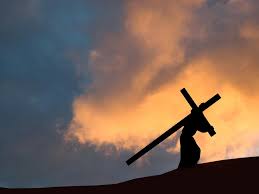
“And anyone who does not carry his cross and follow me cannot be my disciple” (Luke 14:27).

As we celebrated Easter this past Sunday, we remembered how Jesus was tortured for our sins, then how he had to carry that massive wooden cross on his bleeding shoulders to the top of the hill before being crucified on it. We remembered the stunning miracles that occurred as he gave up his life. And we celebrate his miraculous resurrection. He is risen. He is risen, indeed. Hallelujah!

Well, shortly before Jesus’ last week leading up to his crucifixion and resurrection, he was teaching about the cost of being a disciple. And he put it like this: “Large crowds were traveling with Jesus, and turning to them he said: “If anyone comes to me and does not hate father and mother, wife and children, brothers and sisters—yes, even their own life—such a person cannot be my disciple. And whoever does not carry their cross and follow me cannot be my disciple. (Luke 14:25-27).

Jesus’ audience would have understood the reference to carrying a cross. One did not carry a cross unless he was literally going to die. What are we to make of a statement like this? It sounds very harsh, very scary. In fact. Jesus was using exaggeration to make a strong point. We do not have to actually hate our family (remember the fifth commandment in Exodus 20:12), but, he is saying that we must love Jesus more. He must be first in our life. Anything that comes before Jesus is an idol, and what Jesus was preaching was that we must eliminate all idols; we must die to self to be his disciple. The Apostle Paul put it this way in Romans 6:1-14 (it is a bit lengthy, but I cannot say it better than Paul):

What shall we say, then? Shall we go on sinning so that grace may increase? By no means! We are those who have died to sin; how can we live in it any longer? Or don’t you know that all of us who were baptized into Christ Jesus were baptized into his death? We were therefore buried with him through baptism into death in order that, just as Christ was raised from the dead through the glory of the Father, we too may live a new life.

For if we have been united with him in a death like his, we will certainly also be united with him in a resurrection like his. For we know that our old self was crucified with him so that the body ruled by sin might be done away with, that we should no longer be slaves to sin— because anyone who has died has been set free from sin.

Now if we died with Christ, we believe that we will also live with him. For we know that since Christ was raised from the dead, he cannot die again; death no longer has mastery over him. 10 The death he died, he died to sin once for all; but the life he lives, he lives to God.

11 In the same way, count yourselves dead to sin but alive to God in Christ Jesus. 12 Therefore do not let sin reign in your mortal body so that you obey its evil desires. 13 Do not offer any part of yourself to sin as an instrument of wickedness, but rather offer yourselves to God as those who have been brought from death to life; and offer every part of yourself to him as an instrument of righteousness. 14 For sin shall no longer be your master, because you are not under the law, but under grace.

Does taking up our cross mean that we will be persecuted? Perhaps. Does it mean that we will give up sinful pleasures? It should. Does it mean that we will serve Him? Hopefully. Does taking up our cross mean that we will love Him and worship only Him? Yes!

Here’s the thing: Jesus died for our sins, but then He was resurrected to eternal life in heaven with his Heavenly Father. We must die to self and sin so that we can not only walk the Christian walk, but also so that we can live eternally with Jesus. It will not be easy to exchange the worldly life with all its seeming pleasures for a life of following Jesus, but it will be eternally worth it. It is the only way.

In Christ,

Judy