Archive | January 2020

Chaplain’s Corner – The Beginning of Wisdom

“The fear (awe and reverence) of the Lord is the beginning of wisdom, and knowledge of the Holy One is understanding” Proverbs 9:10).

A couple of weeks ago I was inspired to write about how our staff had rallied around one of our own who is going through a rough patch. The Scripture that came to mind was about how we join together for mutual encouragement, support, and strength using the analogy of joining our individual “temples” together to build the church (Ephesians 2:19-22). Then last week, continuing a similar analogy, I wrote about the mansions we can look forward to in heaven (John 14:2-3). As so often happens, in my reading last week on wisdom, the Scripture referenced another building analogy, this time a house (Matthew 7:24-27):

 “Everyone then who (1) hears these words of mine and (2) does them will be like a wise man who built his house on the rock. And the rain fell, and the floods came, and the winds blew and beat on that house, but it did not fall, because it had been founded on the rock. And everyone who hears these words of mine and does not do them will be like a foolish man who built his house on the sand.  And the rain fell, and the floods came, and the winds blew and beat against that house, and it fell, and great was the fall of it.”

By the way, this passage is the final section of the three chapters that make up Jesus’ beloved Sermon on the Mount, which closes with this admonishment:  “And when Jesus finished these sayings, the crowds were astonished at his teaching,  for he was teaching them as one who had authority, and not as their scribes” (Matthew 7:28-29). In other words, Jesus knows what he is talking about; he is speaking the truth.

Jesus is comparing the wise (one who builds his house on a foundation of rock) with the foolish (one who builds his house on sand). Note that there is no in-between. In other words, if you are wise, then you are not foolish. If you are foolish, you are not wise. According to this parable, there are only two requirements to be wise: 1) to hear the Word, and 2) to do what the Word says. So, if we refuse to hear God’s Word (because we don’t read our Bibles or pay attention in church or participate in Bible study), or if we hear it but are not obedient to all the teaching, then we are foolish.

What is the result of being foolish? When hard times come, we fall/fail/give up/relapse/etc. Notice that we are not talking about a momentary slip which we recover from quickly using what we have learned from our discipleship process. We are talking about epic fails. The scripture says, “and great was the fall of it.” This is a fall that wreaks havoc, causes damage, seriously impacts others. It doesn’t mean we can’t rebuild, but it does mean that we must rebuild on the rock next time to be successful.

What is the result of wisely building on the rock? It means that when hard times come (and notice that being wise does not exempt you from hard times), you will be able to withstand temptation and stay strong.

The Rock. (Notice that the definite article “the” is used, not the indefinite “a” or “an.”) The Rock. Jesus said that our acknowledgement that Jesus is Christ, son of the living God, is The Rock on which the church is built. Jesus says that the greatest commandments are to Love God and to Love Others. He says that those who love him will demonstrate it by keeping his commandments. In other words, wisdom means obedience to the teachings of Jesus, which of course you can only know by reading your Bible, participating in Bible studies, and listening to your preacher in worship services. It’s simple; not easy, but it is simple. As so many of you have said to me, it’s making the next right decision, and being diligent day by day. The Apostle Paul reinforces the connection between Jesus as the rock in 1 Corinthians 10:3-4, which refers to Numbers 20:8-12 where the rock was the source of water for Israel when they were in the wilderness. (Don’t you just how the gospel is woven through every section of the Bible?)

I mentioned in the first paragraph that I had been reading on wisdom. Every year, I choose a word to focus my studies around. This year, the word is “wisdom.” This means that you may be hearing a lot from me this year on the topic of wisdom, beginning today.

My heart is full thinking about my great love for all of you, and this only recalls Jesus’ infinitely greater love for each of us. He asks nothing of us but our love and obedience, and he does nothing that is not for our good, in His impeccable timing. We can trust Him. He is the Way, the Truth, and the Life.

In Christ,

Judy
Chaplain’s Corner – The Way Home

I was very fortunate growing up in that I always had a place to call home. I was never in doubt as to where I lived or that there was someone at home to welcome me. I didn’t fully appreciate this until I went to work for Nashville Rescue Mission where I have come to know so many, many people who have had times, sometimes extended, where they did not have a secure place to call home.

As a child, I loved to read and had a vivid imagination. As blessed as I was with home and family, I imagined other places to call home that were, at least in my mind, so much better. I confessed during the Operations Bible Study last week that as a child I dreamed of finding out that I was actually a princess and that I was finally going to live in a castle. I also dreamed that “The Millionaire” would come to my door with, you guessed it, a million dollars. I would lay awake at night and think about how I would spend that million dollars, and always near the top of my list– after ten new dresses each described in minute detail with shoes to match–was a red brick house. You see, I had always lived in a white frame house, and I thought that red brick houses were somehow better. Rich people lived in red brick houses. I know, how petty of me. But I’m just being honest.

Most of us do probably dream of better things than what we currently have. It’s really okay to have a picture in our minds of something to aspire to. Jesus was especially good at painting word pictures. And you know what, He even gave us a word picture of how our home will be like in heaven. He promised us, in John 14:2-3“In My Father’s house are many mansions; if it were not so, I would have told you. I go to prepare a place for you. And if I go and prepare a place for you, I will come again and receive you to Myself; that where I am, there you may be also.”

In other versions, the word “mansions” is replaced with “rooms”, or “dwelling places” or “homes”. But I really like the idea of a mansion which is how the King James Version describes it. Heaven won’t be just a room, or an apartment, or any old dwelling place. It won’t be a little frame house, or even a brick house. It will be exquisite, inside and out. It will be more beautiful than we can imagine, and it will be furnished with beautiful things. More importantly, it will be filled with love. It will be home in the finest sense of the word.

What I sensed but did not appreciate as a child was that my home was not my home because of the type of physical structure. It was my home because that’s where my family lived. After we moved from Navy housing, we lived with my grandmother. Then when we moved out to our own home it was my mother, my father, and eventually my two brothers. Even though I dreamed of castles and red brick houses, I knew they would never be home without my family. It’s the same way with our heavenly home. The picture of a mansion is glorious. However, it’s the last part of the passage above that makes Heaven our Home: “… that where I (Jesus) am, there you may be also.”

In last week’s Chaplain’s Corner on Unity, I referenced the church as a physical structure as well as a “body of believers.” In keeping with those metaphors, 2 Corinthians Chapter 5 contains references to both the earthly dwelling and the heavenly home of our souls. Just as the church is really the people and not the structure, being at home in Heaven means being in the presence of the Lord.

“For we know that if the earthly tent we live in is destroyed, we have a building from God, an eternal house in heaven, not built by human hands…. Therefore we are always confident and know that as long as we are at home in the body we are away from the Lord. For we live by faith, not by sight. We are confident, I say, and would prefer to be away from the body and at home with the Lord.”

The takeaway? No matter your current earthly status—your current vs your desired living arrangement, your current vs your desired job, your current vs your desired marital status, or any other current vs desired status—put your trust in Jesus. It’s your eternal status that really matters. The Apostle John tells us this, and so does Paul in 2 Corinthians.

The point of this passage from the Gospel of John is reassurance of Jesus’ ongoing love for his children. He and his disciples have just enjoyed an intimate time of fellowship during the Passover celebration (we now call it the Lord’s Supper or the Last Supper), and now Jesus is now trying to prepare them for his death, resurrection, and ascension to Heaven. Even though he will not be with them physically any longer, he will be there for them, and us, in Heaven. He tells them: “‘Let not your heart be troubled; you believe in God, believe also in Me. In My Father’s house are many mansions; if it were not so, I would have told you. I go to prepare a place for you. And if I go and prepare a place for you, I will come again and receive you to Myself; that where I am, there you may be also. And where I go you know, and the way you know.’ …Jesus said to him, ‘I am the way, the truth, and the life. No one comes to the Father except through Me.’” (John 14:1-4, 6).

Trust in Jesus, He is the way Home.

In Christ,

Judy

Chaplain’s Corner – Joined Together in Unity

“As you come to him, the living Stone—rejected by humans but chosen by God and precious to him— you also, like living stones, are being built into a spiritual house to be a holy priesthood, offering spiritual sacrifices acceptable to God through Jesus Christ.” (1 Peter 2:4-5)

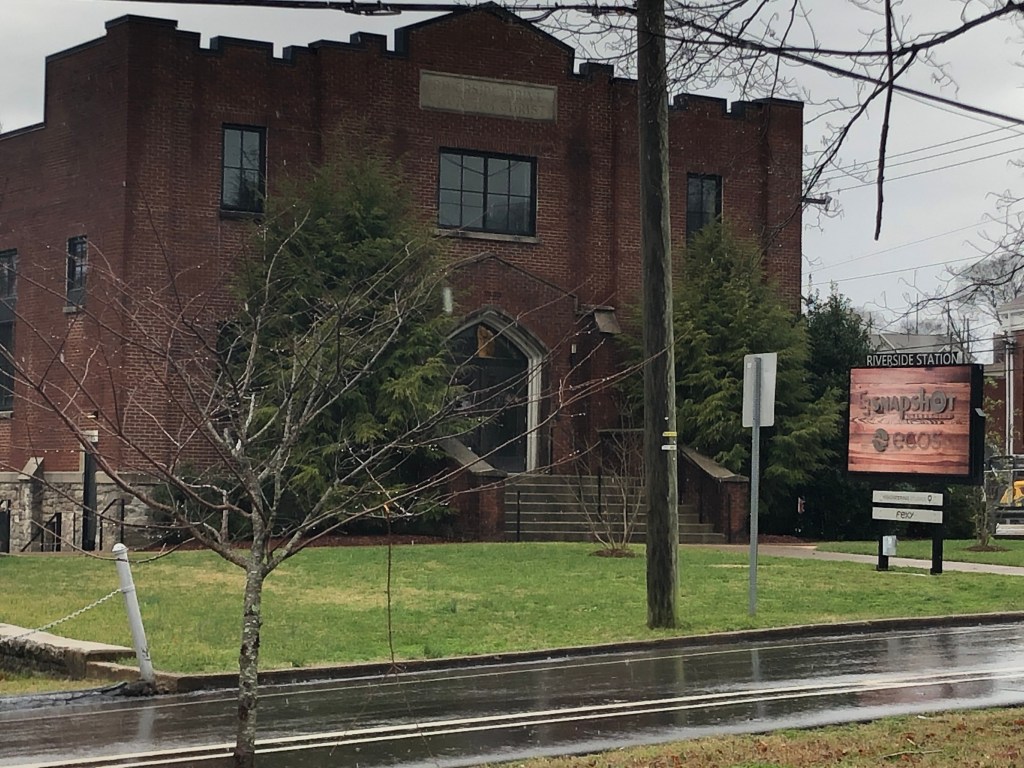
In my old neighborhood are several structures that used to be church buildings. One is now a photography studio (as best I can tell), one is a burned-out foundation, and one is just not in use anymore, looking more and more rundown every time I drive by. The church of my youth was falling down from lack of funds to care for it until another church took it over, and now it is beginning to thrive again. Hopefully, the members of those other churches are worshipping somewhere else, but what I think is that the older members died out and there was not a new generation of believers to continue. That is another issue, and not what I want to talk about today.

The church is not the building, although the Scriptures use a physical structure as a metaphor as in this passage: “Consequently, you are no longer foreigners and strangers, but fellow citizens with God’s people and also members of his household, built on the foundation of the apostles and prophets, with Christ Jesus himself as the chief cornerstone. In him the whole building is joined together and rises to become a holy temple in the Lord. And in him you too are being built together to become a dwelling in which God lives by his Spirit.” (Ephesians 2:19-22)

The church is a “body of believers” with Christ as the cornerstone. In this and other passages, we learn that each believer is a temple in which God resides. Don’t you know that you yourselves are God’s temple and that God’s Spirit dwells in your midst?” (1 Corinthians 3:16). Then together we unite to become the whole building, joined together to rise and become a holy temple in the Lord. However, if we don’t fit together and work together and support each other, we lose our connection to this holy institution and the opportunity to grow in Christ.  “They have lost connection with the head, from whom the whole body, supported and held together by its ligaments and sinews, grows as God causes it to grow.” (1 Corinthians 2:19).

Make no mistake, God’s house–the church–does not depend on us. It will succeed until such time as it becomes the bride of Christ to live and reign with him forever. However, we know that the kingdom is now, and as believers we desire to be a part of it now. We cannot do that by being a force of destruction. In nature, nothing is stable. It is either growing or rotting. That means that the structure is either growing stronger and more like Christ and more useful for the Kingdom, or it is rotting and becoming an eyesore like the buildings I mentioned above.

The question for you is this: do you want to flourish as part of the thriving body of Christ, or are you content to slowly disintegrate into a broken structure, because there is no in-between. The Lord characterizes a person who is not flourishing in terms of temperature, calling him “lukewarm.” And he detests a lukewarm Christian. “So, because you are lukewarm—neither hot nor cold—I am about to spit you out of my mouth” Revelation 3:16).

 We witnessed a beautiful thing last week. One of our staff was very transparent and vulnerable in sharing something very painful with us all and some decisions he had made that are life-changing. Although painful, it was a beautiful thing that he felt he could share it with his co-workers.  He took a risk to be transparent, which in itself is a growth experience. And so many of his co-workers reached out to him to encourage, support, and comfort him, some sharing their own painful stories and how they are overcoming even now. What a beautiful picture of the church, of how the body can strengthen and build/rebuild by coming together in support.

This is an example of unity, and this is pleasing to God.

“Therefore encourage one another and build each other up, just as in fact you are doing”  1 Thessalonians 5:11.

Chaplain’s Corner – The Heart of the Matter

“You were taught, with regard to your former way of life, to put off your old self, which is being corrupted by its deceitful desires; to be made new in the attitude of your minds; and to put on the new self, created to be like God in true righteousness and holiness.” Ephesians 4:22-24

I’m still in the mode of New Year’s Resolutions—there are all kinds of things I want to change about myself.  However, maybe I need to rethink this effort. In the January 7 devotional from the book that Glenn gave us, Live in Grace, Walk in Love, Bob Goff says we don’t need resolutions, we just need to “go love everybody.” In other words, Just Do It. And last Sunday, my pastor said we don’t need a resolution, we need a revelation, quoting from Jeremiah 33:3.

Regardless of whether we make resolutions or not, most of us do want to be better, we want to make changes, and we would like to make them stick. There are theories about change that involve behavior, meaning that we can act or behave our way to change. However, the effectiveness of this approach varies, and often is not sustainable. According to God’s Word, real transformative change is to first set our hearts on things above, to adopt the mind of Christ. There is so much wisdom in this passage below from Colossians 3:1-17. I tried to omit some of it for brevity, but the message is just too important. I hope you will read it carefully and see the logical progression of transformation:

  1. Since, then, you have been raised with Christ, set your hearts on things above, where Christ is, seated at the right hand of God. Set your minds on things above, not on earthly things. For you died, and your life is now hidden with Christ in God. When Christ, who is your life, appears, then you also will appear with him in glory.
  2. Put to death, therefore, whatever belongs to your earthly nature: sexual immorality, impurity, lust, evil desires and greed, which is idolatry. Because of these, the wrath of God is coming. You used to walk in these ways, in the life you once lived. But now you must also rid yourselves of all such things as these: anger, rage, malice, slander, and filthy language from your lips. Do not lie to each other, since you have taken off your old self with its practices and have put on the new self, which is being renewed in knowledge in the image of its Creator. Here there is no Gentile or Jew, circumcised or uncircumcised, barbarian, Scythian, slave or free, but Christ is all, and is in all.
  3. Therefore, as God’s chosen people, holy and dearly loved, clothe yourselves with compassion, kindness, humility, gentleness and patience. Bear with each other and forgive one another if any of you has a grievance against someone. Forgive as the Lord forgave you. And over all these virtues put on love, which binds them all together in perfect unity.
  4. Let the peace of Christ rule in your hearts, since as members of one body you were called to peace. And be thankful. Let the message of Christ dwell among you richly as you teach and admonish one another with all wisdom through psalms, hymns, and songs from the Spirit, singing to God with gratitude in your hearts.
  5. And whatever you do, whether in word or deed, do it all in the name of the Lord Jesus, giving thanks to God the Father through him.

When we begin to understand this passage from Colossians, then the teaching of Jesus in Matthew 5:20-22 begins to make more sense: “You have heard that it was said to the people long ago, ‘You shall not murder, and anyone who murders will be subject to judgment.’ But I tell you that anyone who is angry with a brother or sister will be subject to judgment.”  If in our hearts we are angry, in Christ’s kingdom that is just as bad as actually committing murder. We must first experience a heart change before we can truly fully obey Christ’s teaching.

Chameleons can change their colors and change them back again. However, when caterpillars transform into butterflies, they will never be caterpillars again. Change is hard, and for people, transformation is impossible without the Holy Spirit. We do see from the passage in Colossians that we are called to do something: to “set our minds”, to “put to death” the bad stuff, to “clothe” ourselves with the good stuff, to “let the peace of Christ rule in our hearts”, and to “be thankful.”  I used to think that through self-control, I could do anything; however, as I repeatedly learned the hard way, I actually couldn’t make needed changes stick through my own efforts. I clearly remember the relief I felt when I finally came to understand that self-control is actually one of the fruits of the spirit (Galatians 5:22-23). In other words, we have self-control and the ability to make changes and to be transformed only through the grace of God and the work of the Holy Spirit. As a believer, the Holy Spirit will help us to accomplish all these important changes, if we are doing them “in the name of the Lord Jesus.”

“I appeal to you therefore, brothers, by the mercies of God, to present your bodies as a living sacrifice, holy and acceptable to God, which is your spiritual worship. Do not be conformed to this world, but be transformed by the renewal of your mind, that by testing you may discern what is the will of God, what is good and acceptable and perfect.” Romans 12:1-2)

In Christ,

Judy

Chaplain’s Corner – Test Yourself

Happy New Year! I wonder how all the Vision 2020 Statements have been renamed?  Vision 2025 just doesn’t have the same ring. Vision 2030 sounds like a prescription for glasses is needed. Oh well, that’s just an aside. It’s a brand-new year, and Jesus hasn’t had his second coming yet, so that means there is still work on this earth yet to do.

If you are employed by Nashville Rescue Mission, you are more than a spectator to what God is doing in this world; you are the hands and feet of Jesus. You are truly demonstrating godly compassion by ministering to the least of these Matthew 25:34-40.

In my daily Bible reading last a few weeks ago, I came across a passage from 2 Corinthians 13:5 that struck me in a new way: “Examine yourselves to see whether you are in the faith; test yourselves. Do you not realize that Christ Jesus is in you—unless, of course, you fail the test?”

Testing is a big deal in the Bible. God tests us. We see examples in the Bible of how God tested his people. God tested the Israelites when he gave them manna along with the instructions to only collect what was needed for the day (Exodus 16:4). Among many other examples, we know that God tested the Israelites during the time of the Judges (Judges 3:1-4) and during the Captivity (Jeremiah 9:7). I believe that God tests us not only with the hardships we must endure, but also with blessings. One of my favorite stories about my Grandpa is that he found a twenty-dollar bill on the sidewalk (he was a mailman and his route was downtown Nashville). He picked it up and somehow managed to find the owner. He did not keep it himself. Not only did he pass that test, my family retold the story to his grandchildren so that we were motivated to follow his example.

Every moment is a moment of decision, of testing. What will we think? What will we say? What will we do? We can be choose to be negative, we can choose to be-serving, we can choose to be wasteful. Or we can choose to be grateful, we can choose to be compassionate, we can choose to be a good steward of what we have been given. Every moment is an opportunity to make the best decision.

God tells us to test Him with our giving. “Bring the whole tithe into the storehouse, that there may be food in my house. Test me in this,” says the Lord Almighty, and see if I will not throw open the floodgates of heaven and pour out so much blessing that there will not be room enough to store it” (Malachi 3:10).

But we are also told to test ourselves. We are told to test ourselves to see if we really have Christ in us, to ensure whether we are really in the faith. Honestly, I had not thought about the concept of testing myself. What could that even mean? I read many commentaries on this, and trust me, there are many commentaries on this passage. I began to get overwhelmed with all the commentaries. But knowing that this is serious, it can mean life or death, I persisted. I need to know how to test myself. Just what is the practical application of this passage? Here are my thoughts on this passage and include some things that I plan to focus on this year in my own personal walk.

I believe that the examination process should be a daily exercise; it is an important part of our prayer life. “If we confess our sins, he is faithful and just and will forgive us our sins and purify us from all unrighteousness” (1 John 1:9). I believe that this passage is telling us to be specific in our confession, so in our prayer life, if we examine our day and confess where we have fallen short, ask for forgiveness and for help from the Holy Spirit to do better, we will grow in our faith and glorify our Father in heaven. Some specific things I will commit to review in my daily prayer life are:

  1. Did I study God’s Word today? Since God tests our obedience as shown in the Scriptures above, I know that I should make it a priority to be obedient to His Word, which also means that I should know His Word. So one test is to be sure that I am studying God’s word, and doing what it says (2 Corinthians 9:13), even when it’s hard. Know that we will not be tested to see if we can recite a litany of “ought to’s.” Knowledge is important, of course, but we are tested to see if we have actually owned our faith, if we are wearing our faith, if it is who we are.
  2. Did I trust God today? God tells us in his Word to trust Him. This is implied in the example of the provision of manna. It is also implied in the passage from Malachi above. And Jesus makes it very clear that we are not to worry (Luke 12:22-34). I believe that worry means that we are not trusting God as we have been instructed to do.
  3. Have I exhibited the fruits of the spirit today? Galatians 5 says those who belong to Christ Jesus have crucified the flesh with its passions and desires, and instead exhibit the fruits of the spirit (Galatians 5:22-26). Have I taken every opportunity to demonstrate love, joy, peace, forbearance, kindness, goodness, faithfulness, gentleness, and (last but not least) self-control?

This is by no means an exhaustive list, but it’s a reasonable start. I sincerely want you to know how my heart has been so blessed by your many acts of obedience and your many demonstrations of trust and exhibitions of the fruits of the spirit over the past Thanksgiving and Christmas season. As we have been short staffed due to illness, at the same time being busier than ever serving those in need, you have risen to the occasion with love and grace to work extra hours, sometimes with little notice. Your obedience has been a testimony to many others. Your cheerfulness and compassion have been the embodiment of Christ.  You are each an encouragement to me and to each other, and I pray that we will all be an encouragement to each other throughout 2020. May God richly bless you all.

In Christ,

Judy

P.S. Thought you might like to know that this is the 101st Chaplain’s Corner since beginning in February 2018.